
Consulting, Technology and Services
5G Explained: Connecting Possibilities
5G, or fifth‑generation mobile technology, represents a major leap forward in how people, devices, and systems connect and communicate. More than just an upgrade from 4G, 5G is designed to support a fully connected digital world enabling faster speeds, lower latency, higher capacity, and new use cases across industries.
5G is built to handle the growing demand for data, real‑time communication, and massive device connectivity. It uses a combination of advanced radio technologies, new frequency bands, and a more flexible network architecture to deliver superior performance compared to previous generations.

Key Features of 5G
Ultra‑Fast Speeds
5G delivers data speeds significantly faster than 4G, reaching up to 10 Gbps in peak conditions. With such performance, users benefit from seamless streaming, rapid downloads, and smooth cloud access, even for bandwidth-intensive applications like AR/VR, high-definition video, and large-scale IoT data transfers.
Low Latency
Latency, the time required for data to travel from one point to another, is drastically reduced with 5G, dropping to as low as 1-10 millisecond. As a result, real-time use cases such as autonomous driving, remote surgery, and online gaming become possible, where instant responsiveness is essential.
Massive Device Connectivity
Built to handle massive connectivity, 5G supports up to 100× more devices per square kilometer. This capability is crucial for IoT expansion, enabling sensors, machines, and smart devices to communicate efficiently while avoiding network congestion.
Improved Reliability and Efficiency
Advanced network technologies in 5G significantly enhance network efficiency, boosting energy usage and processing capabilities by up to 100× compared to 4G. Thanks to these improvements, connections remain stable and performance stays consistently high, even in dense urban areas or during peak usage, enabling sustainable support for growing data demands over the long term.
Enhanced Connectivity in Remote and Challenging Areas
By dramatically increasing traffic capacity, 5G can handle up to 100× more data traffic than 4G while maintaining reliable connectivity in challenging locations such as mines, offshore platforms, construction sites, and remote industrial zones. Combined with private networks and flexible deployment models, it enables real-time monitoring, dependable communication, and improved safety, ensuring smooth operations even in hard-to-reach environments
Energy Efficiency
5G is engineered for far greater energy efficiency, enhancing network processing and energy utilization by up to 100× compared to 4G. Through smarter data transmission and optimized device activity, power consumption is reduced, sustainability targets are supported, and operational costs are gradually lowered over time.
Enhanced Security
5G enhances protection against cyber threats through advanced encryption, strong authentication mechanisms, and network slicing capabilities. Together, these security features enable secure access, safeguard sensitive data, and isolate critical applications, making 5G especially well suited for sectors like finance, healthcare, and critical infrastructure, where security and reliability are essential.
How 5G Is Transforming Industries

Smart Cities
5G acts as the digital backbone of smart cities by enabling ultra-reliable, low-latency connectivity at scale. It supports intelligent traffic management, adaptive street lighting, real-time environmental and infrastructure monitoring, and more responsive public services, connecting thousands of sensors and systems seamlessly to improve efficiency, sustainability, and quality of urban life.
Transportation and Mobility
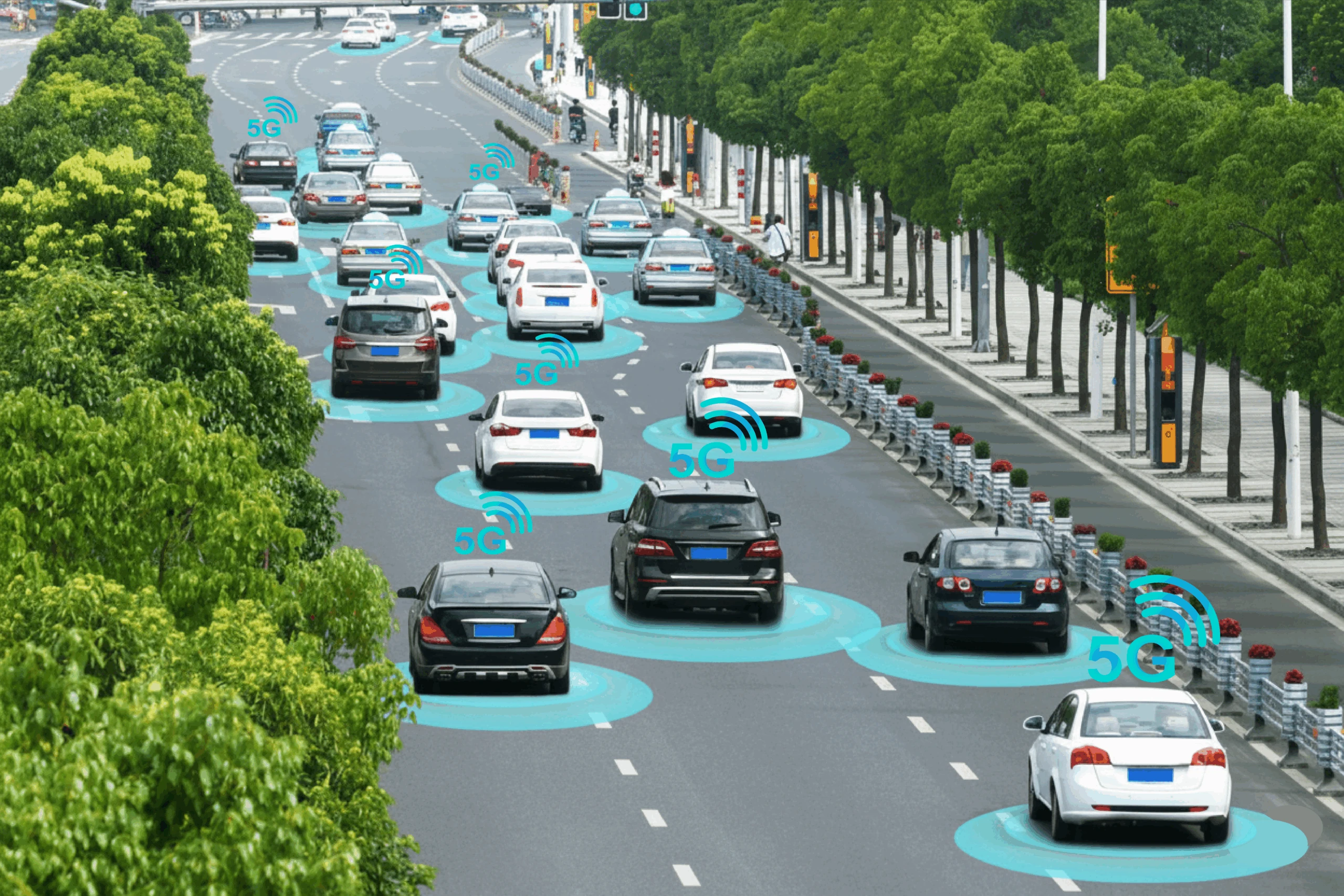
5G enables safer and more efficient transportation by providing the low latency and high reliability required for connected vehicles, smart logistics, and advanced navigation systems. It supports real-time vehicle-to-everything communication, dynamic traffic optimization, and precise tracking. It improves safety, reduces congestion, and streamlines mobility operations.

Manufacturing
5G is transforming operations by enabling private networks in locations where other connectivity solutions, such as fiber, are difficult or impossible to deploy. Factories, remote mines or large construction sites can leverage 5G to connect machines, sensors, and robots wirelessly, ensuring real-time monitoring, automation, and operational efficiency. By providing low latency, high reliability, and massive device connectivity, 5G allows industrial operations in these remote or challenging environments to maintain productivity, safety, and seamless communication.
Logistics
5G enables real-time tracking and automation across the supply chain, delivering end-to-end visibility of goods and assets. With low latency and reliable connectivity, it helps reduce delays, optimize fleet management, and enhance warehouse operations, resulting in faster, more efficient, and more resilient logistics.
