
Consulting, Technology and Services
Choose the Right Ethernet Cable Cat5 vs Cat6 vs Cat7 vs Cat8
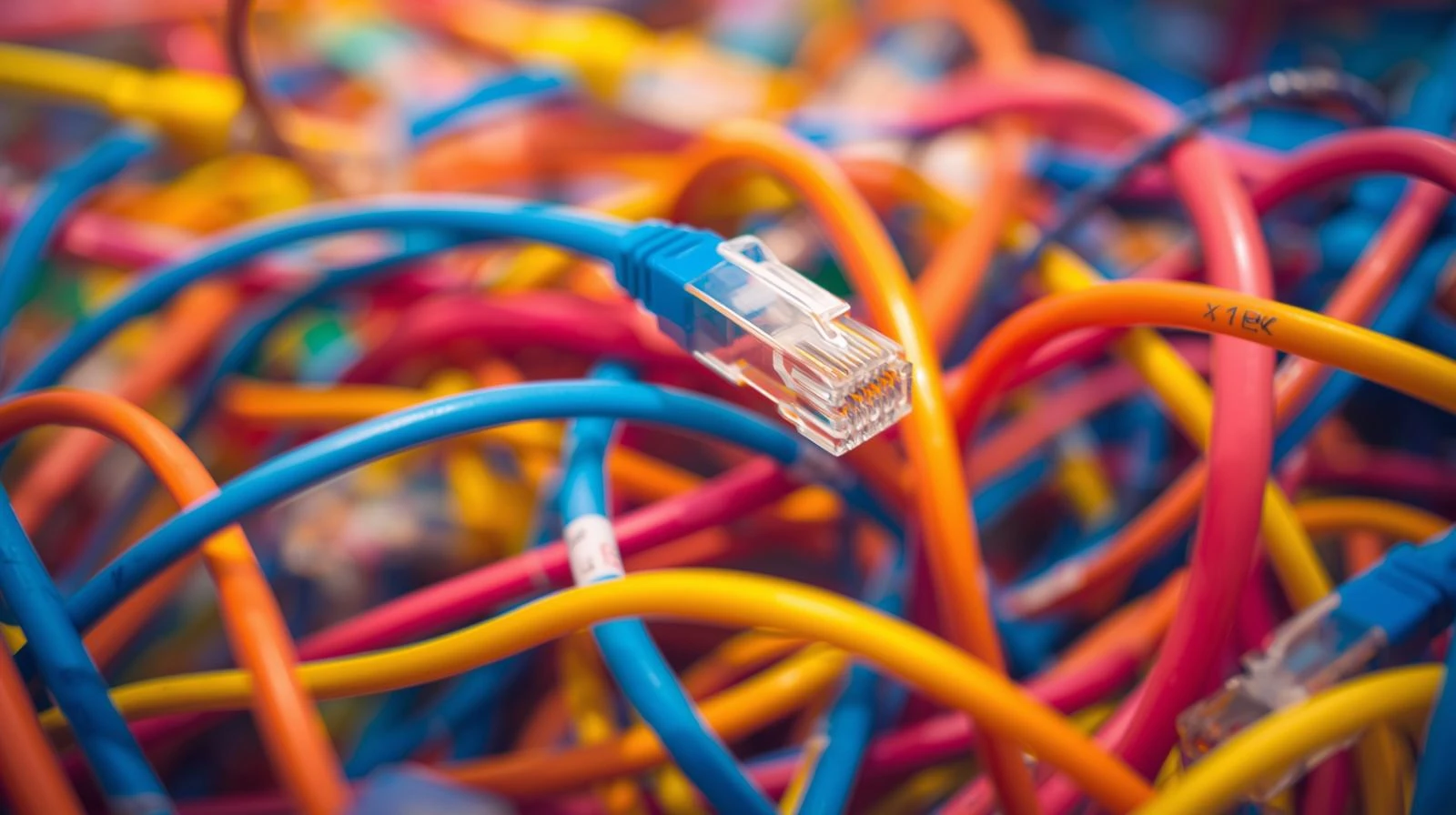
In today’s hyperconnected world, every second of lag, every dropped signal, and every buffering icon can feel like an eternity. Whether you’re streaming, gaming, or managing mission-critical data, a stable network connection is non-negotiable. And while Wi-Fi gets most of the attention, your Ethernet cable is often the silent hero behind your connection’s strength and speed.
Before diving into technical details, let’s make sense of what these “Cat” numbers actually mean. Each category from Cat5 to Cat8 represents a new standard of Ethernet technology, with faster speeds, higher frequencies, and smarter design. Think of it as the evolution of wired links: every upgrade brings smoother streaming, quicker downloads, and a more stable connection.
Cat5: The Original Classic
Before high-definition streaming and cloud computing, Cat5 was the workhorse of early home and office networks. Today, it’s considered obsolete, offering up to 100 Mbps and 100 MHz, enough for basic browsing and email, but not for modern data-heavy needs.
Cat5e: The Reliable Everyday Upgrade
Cat5e improves on the original Cat5 with better signal control and reduced interference. Supporting speeds up to 1 Gbps and maintaining a 100 MHz frequency, it handles everyday tasks smoothly from streaming to office work.
It’s a simple, cost-effective step up for users who want faster, cleaner, and more stable performance without changing their whole setup.
Cat6: The Everyday Power Performer
Meet Cat6, the cable that made high-speed links feel effortless. Supporting up to 10 Gbps over shorter distances and offering much better insulation than Cat5, Cat6 is perfect for most homes and offices that rely on fast, consistent connections.
Its design minimizes crosstalk (signal interference), ensuring smoother data flow which means less lag and more reliability whether you’re on Zoom calls or streaming in 4K.
Cat6a: The Strong, High-Capacity Performer
Cat6a takes the capabilities of Cat6 further with enhanced shielding and support for stable 10 Gbps performance. Operating at 500 MHz, it maintains strong, reliable connectivity even in environments with high interference.
Ideal for enterprise networks, data-heavy applications, and modern data centers, Cat6a delivers the consistency and durability required for high-speed infrastructure.
Cat7: Built for Heavy-Duty Networking
When your network needs to go the extra mile, Cat7 steps up. Designed with advanced shielding to block electromagnetic interference (EMI), this cable delivers top-tier stability and bandwidth for demanding environments.
It’s capable of pushing speeds up to 10 Gbps over 100 meters and even 100 Gbps at shorter distances all while maintaining exceptional signal clarity.
Cat8: The High-Speed Backbone of Today’s Network
Welcome to the fast lane of wired connectivity. The Cat8 cable is engineered for speed, precision, and performance the kind of tech you’ll find in data centers, cloud infrastructure and server rooms. With speeds up to 40 Gbps and a blazing 2 GHz frequency, Cat8 is a game-changer for professionals who move massive data in real time.
Its robust shielding ensures clean, reliable signals even in the most complex environments.
| Features | Cat5 | Cat5e | Cat6 | Cat6a | Cat7 | Cat8 |
|---|---|---|---|---|---|---|
|
Max Speed |
100 Mbps |
1 Gbps |
1/10 Gbps |
10 Gbps |
10 Gbps |
25-40 Gbps |
|
Frequency |
100 MHz |
100 MHz |
250 MHz |
500 MHz |
600 MHz |
2 GHz |
|
Max Length |
100 m |
100 m |
55m(10G), 100m(1G) |
100 m |
100 m |
30 m |
|
Cost |
$ |
$ |
$ |
$$ |
$$$ |
$$$ |
|
Application |
100BaseT Ethernet |
Gigabit Ethernet |
Entreprise, Data Center |
Data Center |
MultiGig links, Core, Data Center |
MultiGig links, Core, Data Center |
How to Pick the Right Ethernet Cable
-
Speed and Bandwidth
If you’re streaming and gaming, Cat6 is a sweet spot. But if you’re running a business network or data center, Cat7 or Cat8 will future-proof your setup.
-
Cable Length
Cable length should be determined by the actual distance between devices. Exceeding the maximum specified length can cause signal attenuation, data errors, and network instability.
-
Interference
If your cables run near power lines or heavy electrical equipment, shielded cables, Cat7 or Cat8, are essential to prevent interference.
-
Budget and Scalability
Higher-category cables cost more, but they’re an investment in long-term reliability and speed. Don’t just buy for today, think about the demands of tomorrow.
